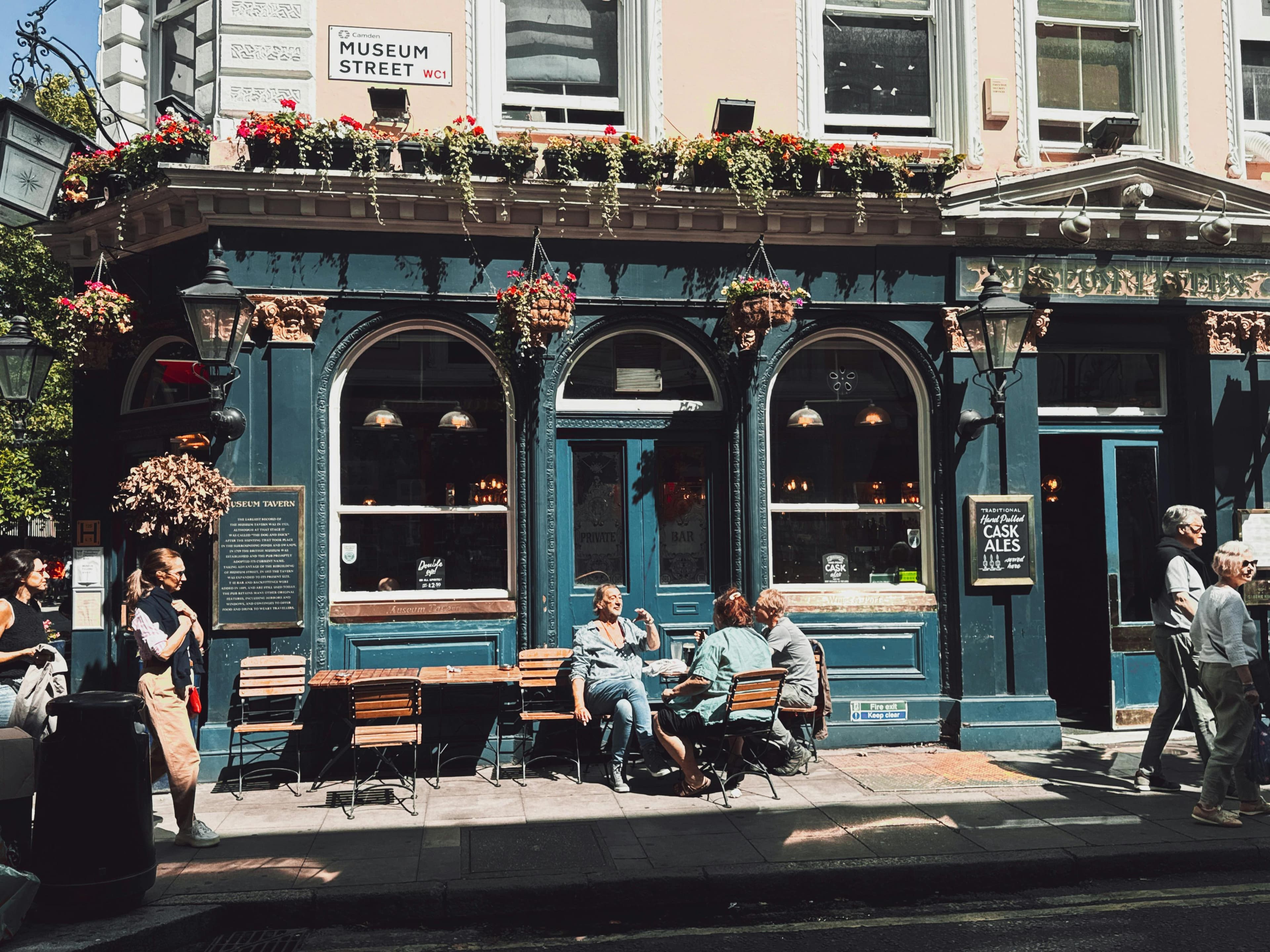
There is no such thing as national pub licensing hours in England and Wales any more. Since the Licensing Act 2003 came into force in November 2005, every pub, bar, restaurant and shop has its own licensed hours, written into its premises licence by the local council. "Last orders at eleven" is a habit, not a law.
This guide explains what licensed hours are, how they are set, what happened to drinking-up time, the special cases people still get wrong (Sundays, New Year's Eve, royal occasions and football finals), and how to extend or reduce your own hours. If you are applying for a licence and want help choosing the right hours first time, see our premises licence service.
If you are starting from scratch, our guide on how to get a premises licence covers the full application: fees by rateable value, the operating schedule, the plan and the advertising deadlines.
What are licensed hours?
Licensed hours are the times on a premises licence during which the venue is authorised to carry out each licensable activity. A licence lists the hours separately for each activity, so a pub might have one set of hours for the sale of alcohol, a later cut-off for recorded music, and a different window for late night refreshment. It also records the opening hours of the premises, which can run past the last alcohol sale.
The important distinction is between selling and consuming. The council licenses the sale and supply of alcohol. It does not license drinking it. Once the last sale is made, customers can finish their drinks for as long as the premises choose to stay open, unless a specific condition on the licence says otherwise. Our guide to what a premises licence allows covers the four licensable activities in detail.
Why there is no fixed closing time
Before 2005 the Licensing Act 1964 set permitted hours nationally, with pubs required to stop serving at 11pm (10.30pm on Sundays) and a short statutory drinking-up period. The 2003 Act swept that away. The statutory guidance issued to councils under section 182 of the Act says in terms that the Government believes fixed and artificially early closing times encourage rapid drinking before closing and push everyone onto the street at the same moment, and that staggered, later hours lead to slower, calmer dispersal.
The practical result is that councils cannot impose a blanket closing time across their area through policy. Each application is judged on its own operating schedule and on whether the proposed hours would undermine the four licensing objectives: preventing crime and disorder, public safety, preventing public nuisance and protecting children from harm. A quiet village pub asking for midnight and a city-centre bar asking for 3am are assessed on their own merits, and on who objects.
What hours do pubs and restaurants usually get?
Although there is no legal limit, most councils publish a statement of licensing policy that sets out the hours they consider the norm, often called core hours or framework hours. Applications inside those hours are rarely contested; applications beyond them need stronger evidence of how the venue will manage noise, dispersal and disorder.
Pubs and bars
Commonly licensed for alcohol until 11pm or 11.30pm on weekdays and midnight or later on Fridays and Saturdays, with opening hours running 30 minutes beyond the last sale. Westminster's core hours policy, for instance, treats around 11.30pm on weekdays and midnight at weekends as the standard for pubs and bars in its busiest areas.
Restaurants
Usually granted alcohol hours that match their meal service, often to 11pm or 11.30pm, with a condition that alcohol is served to seated customers taking a table meal. Councils tend to be more generous to restaurants than to drink-led venues.
Nightclubs and late bars
Can be licensed to 2am, 3am or beyond, but these are the applications most likely to attract police representations, door-staff conditions and refusal in cumulative impact areas.
Shops and off-licences
The statutory guidance says shops, stores and supermarkets should normally be free to sell alcohol for consumption off the premises at any time they are open, unless there is evidence of a specific problem. Many supermarkets hold 24-hour off-sales.
In a cumulative impact area the starting point flips: the council's policy presumes against granting new or later hours unless the applicant can show the venue will not add to existing problems. Read our guide to cumulative impact zones before applying in a town or city centre.
Applying for the right hours is half the battle
Ask for too little and you will pay for a full variation later. Ask for too much without the management measures to back it up and you invite objections. Barnab prepares your operating schedule with hours matched to your council's policy, for a fixed £300 + VAT.
Start my applicationDrinking-up time: what the law says now
Drinking-up time was a feature of the old 1964 Act. It does not appear anywhere in the Licensing Act 2003. Because consuming alcohol is not a licensable activity, the Act only cares about when alcohol is sold or supplied. If your licence allows sales until 11pm and your opening hours run to 11.30pm, customers may finish their drinks in that half hour. If sales and opening hours both end at 11pm, they cannot.
Build the drinking-up period into your opening hours
Most councils' policies recommend a voluntary 30-minute cooling-down period between the last sale and closing. Put it in your operating schedule as opening hours that run 30 minutes past your alcohol hours. Councils like it because it means gradual dispersal, and it costs you nothing.
Do not confuse opening hours with alcohol hours
The licence records both. You may close earlier than your licensed hours on any day you like. What you cannot do is sell alcohol, serve hot food after 11pm, or put on licensable entertainment after the times on the licence.
Watch for conditions that override the default
A licence can carry a condition that all customers must have left by a certain time, or that no drinks are to be consumed after a given time. Those conditions are enforceable and breaching them is an offence, so read Part A of your licence, not just the summary.
Sundays, New Year's Eve and special occasions
Sundays
There are no longer any special Sunday licensing hours. Your licence sets the hours for each day of the week, and many operators simply apply for the same hours seven days a week. Where a council's framework hours are shorter on Sundays, that is local policy rather than national law.
New Year's Eve
This is the one that catches people out every December. Under the old regime licensed premises had an automatic New Year's Eve extension. That ended in 2005. There is no automatic right to trade through midnight on 31 December unless your premises licence says so. Many licences granted since 2005 do include a line allowing licensable activities from the end of permitted hours on New Year's Eve until the start of permitted hours on New Year's Day, but check yours: some cover alcohol and not entertainment, and some do not cover it at all.
If your licence is silent, a Temporary Event Notice is the usual fix. A standard TEN must reach the council at least ten working days before the event, and a late TEN at least five, so for New Year's Eve the deadlines fall in mid-December. Our Temporary Event Notice guide has the full limits.
Licensing hours orders for national celebrations
Section 172 of the Licensing Act 2003 lets the Home Secretary relax licensing hours nationally for occasions of exceptional international, national or local significance, for up to four days. These orders are made every few years and follow the same pattern:
| Occasion | Dates | What was relaxed |
|---|---|---|
| Platinum Jubilee 2022 | 2 to 5 June 2022 | Premises normally licensed to 11pm or later could stay open until 1am; off-sales excluded |
| Coronation 2023 | 5, 6 and 7 May 2023 | On-sales of alcohol extended from 11pm to 1am; late night refreshment only where alcohol was also sold; off-sales excluded |
| UEFA Euro 2024 | England's final, July 2024 | Order made in May 2024 to extend hours for the final should a home nation reach it |
Two things to note. The extension only applies to premises whose existing hours run up to the start of the relaxation, so a pub licensed to 10.30pm gained nothing. And it never covers off-sales. Outside these orders, there is no extension for bank holidays, Christmas Eve or the end of Ramadan: those nights are covered by your own licence or a TEN.
Music and food have their own clocks
Licensed hours are set per activity, and the law treats some activities differently after 11pm.
Live or recorded music in a pub or bar between 8am and 11pm, audience under 500?
Not licensable since the Live Music Act 2012 and the 2015 deregulation. No hours needed on the licence, although noise nuisance law still applies.
Music after 11pm, or for more than 500 people?
Regulated entertainment must be on the premises licence with hours that cover it. This is why many pubs' licences say music until 11pm and alcohol until midnight.
Hot food or hot drink between 11pm and 5am?
Late night refreshment must be on the licence for those hours, including for takeaways and delivery kitchens that sell no alcohol at all.
Hot food before 11pm?
Not licensable. A café that closes at 10pm needs no premises licence for food.
Councils can still cut hours in an area
No national closing time does not mean councils are powerless over late-night drinking. Three tools are worth knowing about.
- Early morning restriction orders (EMROs) let a licensing authority ban alcohol sales between midnight and 6am, or any part of that window, across all or part of its area. They override individual licences.
- The late night levy is an annual charge councils may impose on premises licensed to sell alcohol between midnight and 6am, to help pay for policing the night-time economy.
- Cumulative impact assessments let a council state that an area is saturated, creating a presumption against new licences or longer hours there.
How to change your licensing hours
- 1
To extend hours permanently: full variation
Apply to the council for a full variation of the premises licence. The process mirrors a new application: the same fee band, a 28-day consultation, a notice on the premises and in a local newspaper, copies to the responsible authorities, and a hearing if anyone objects.
- 2
To extend hours for one night: Temporary Event Notice
A TEN covers a single event of up to 168 hours for fewer than 500 people, and can authorise sales beyond your usual hours. Each premises can use up to 15 TENs covering 21 days a year; personal licence holders can give up to 50 a year.
- 3
To reduce hours: minor variation
Cutting your hours is treated as low risk and can normally go through the minor variation route, which has a smaller fee, a ten-working-day consultation and no newspaper advert.
- 4
To trade later every week without varying: you cannot
Regularly trading outside licensed hours is a criminal offence for the licence holder and the DPS, can trigger a review of the licence, and is the quickest way to lose it.
A pub licensed for alcohol until 11pm wants to show a late kick-off and serve until 1am on one Saturday.
A restaurant licensed to 11pm wants to serve drinks until midnight every Friday and Saturday from now on.
A bar with alcohol until 2am and opening hours until 2am wants customers to finish drinks until 2.30am.
Scotland is different
Everything above applies to England and Wales. Scotland's Licensing (Scotland) Act 2005 works through licensing boards that set policy hours for their area, keeps a statutory 15-minute drinking-up period, and restricts off-sales of alcohol to between 10am and 10pm by law. Northern Ireland has its own regime with fixed permitted hours. If your pub is north of the border, do not rely on this guide.
Frequently asked questions
What are the licensing hours in the UK?
In England and Wales there are no national licensing hours. Each premises licence sets its own hours for each licensable activity, and councils publish policy hours they regard as normal. Scotland and Northern Ireland have different laws with statutory limits.
What time do pubs have to close?
At the end of the opening hours on their premises licence, which the pub chose when it applied. There is no legal closing time. A pub can close earlier than its licence allows on any night it wishes.
Can a pub serve alcohol 24 hours a day?
Legally yes, if the council grants 24-hour alcohol sales on the premises licence. In practice very few pubs hold or use such hours; 24-hour licences are mostly held by supermarkets and hotels serving residents.
What time can a pub play music till?
Until 11pm without any entertainment licence, provided the pub is licensed for alcohol and the audience is under 500. After 11pm the licence must authorise regulated entertainment for the hours the music runs. Noise complaints can still lead to a review at any hour.
Do I need a licence to serve alcohol after 11pm?
You need a premises licence to sell alcohol at any time of day. Whether you can sell after 11pm depends only on the hours granted on that licence. Later hours are not a separate licence; they are part of the same application or a later variation.
Need longer hours, or a licence with the right hours from the start?
Barnab prepares new premises licence applications and full variations, matches your hours to your council's policy, and tracks the application online from submission to grant. Fixed fee, documents back within one working day, no hidden charges.
Talk to a licensing specialist